770-431-7300 (Commercial)

Aluminum Finishes
Baked Enamel vs. Anodized & Kynar Finishes
When selecting a finish for exterior architectural aluminum, architects should consider the project’s weather exposure, humidity, and regional climate.
Finishes respond differently to UV, salt, and precipitation over time—so understanding how each system performs in your environment ensures long-term appearance and reduced maintenance.
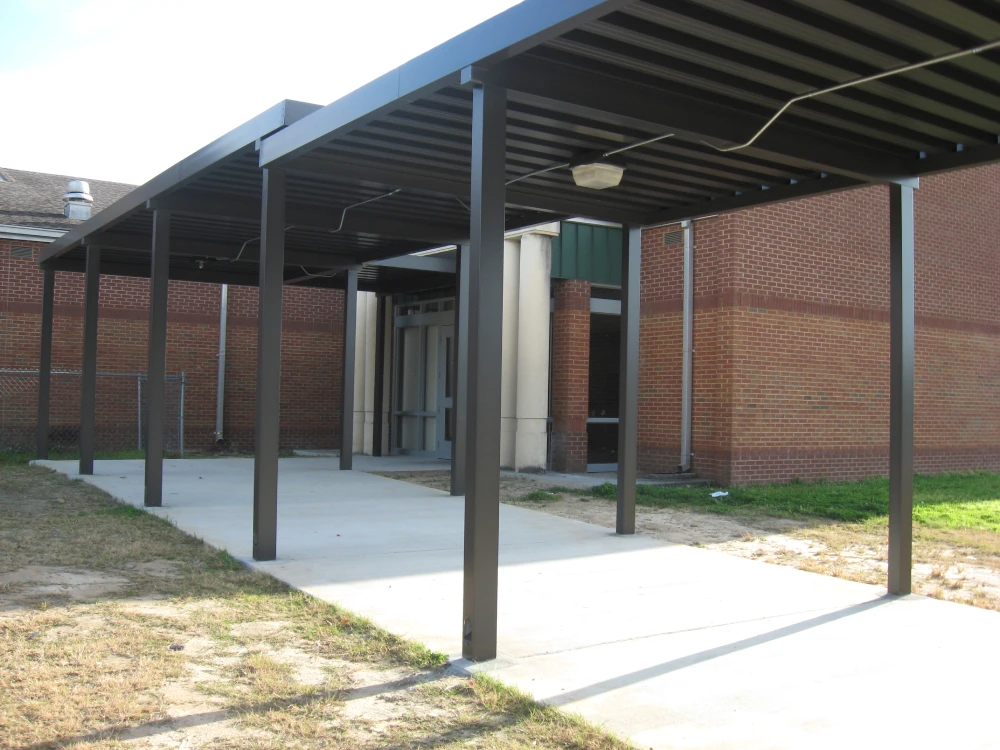
Baked Enamel finish has improved drastically over the years but is often times overlooked due to misconceptions about the finish. The economy and durability of Baked Enamel makes it the popular choice for new construction. The finish is superior quality polyester enamel applied automatically by a hot air assisted electrostatic system, baked at 400 degrees. The finish shall meet or exceed the following AAMA 2603 requirements:
Below is a comparison of Baked Enamel finish, Anodized finish, and Kynar finish.
Color
- Standard Baked Enamel–Bronze, White or Bright Silver
- Anodized—Clear or Dark Bronze
- Kynar – 20 Standard Color Options (Custom Options Available Upon Request)
- Mill Finished
Baked Enamel Paint
- Baked Enamel has a hard coat finish and is very resistant to scratches and damage.
- Baked Enamel will not chalk or fade like anodized aluminum due to the enamel finish protecting the aluminum.
- Baked Enamel is easy to touch up due to it being a painted finish. The touch up paint is also easy to color match to the painted finish.
- Baked Enamel is less expensive than the other major finishes (Kynar & anodized)
- Baked Enamel comes in a variety of colors.
- Baked Enamel also offers predictable color consistency from batch to batch, making it ideal for multi-phase construction projects.
- Because of its smooth, non-porous surface, it sheds dirt easily and performs well in humid or high-traffic school environments.
Anodized Aluminum
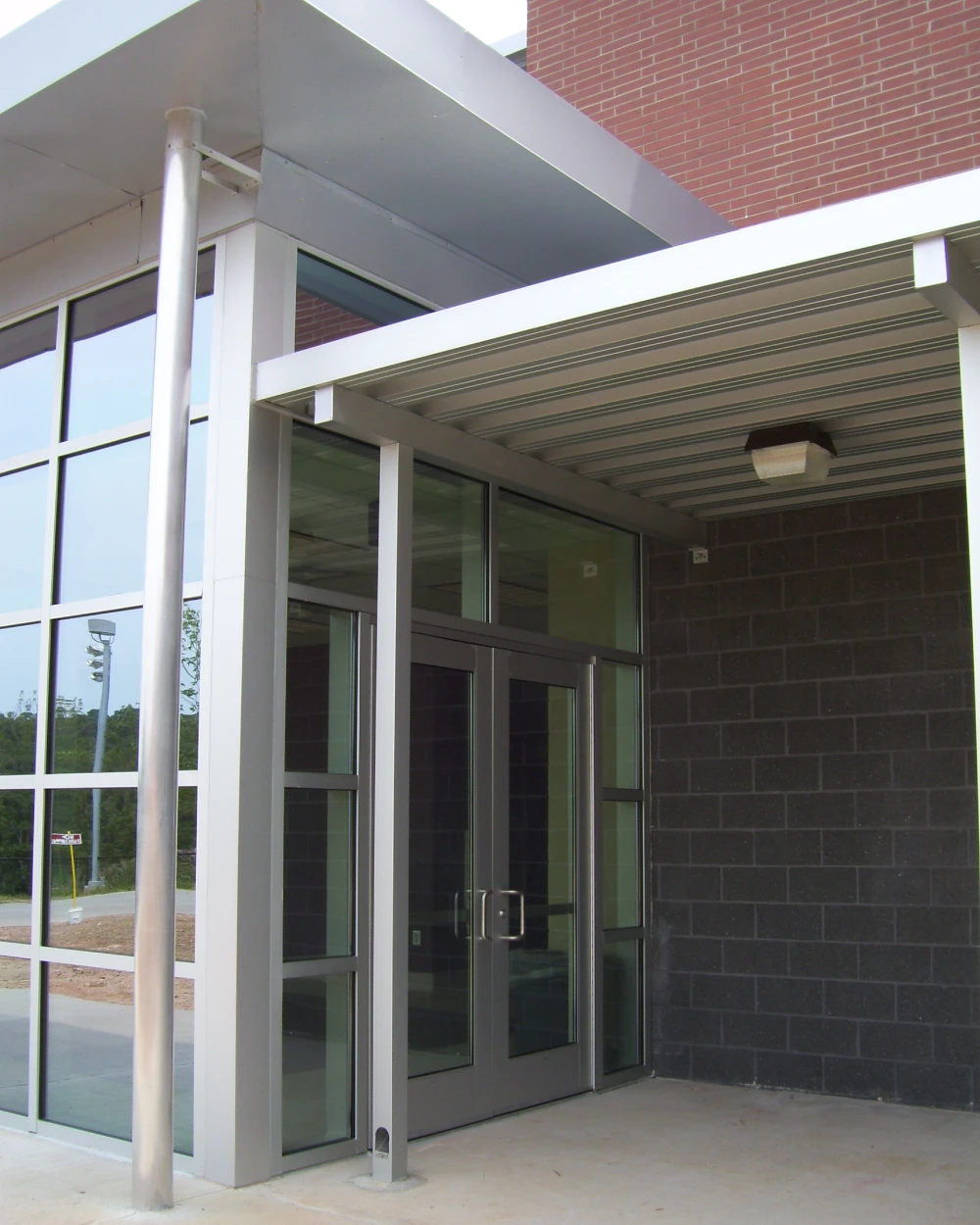
- Anodized aluminum is porous and is more likely to hold dirt and stains in the pours making it harder to clean.
- Anodizing is a chemical process so having a touch up paint made to match is very difficult. Aluminum requires touch up paint because the material is received pre-finished prior to fabrication in most cases.
- Since anodizing is a timed chemical process, there are more inconsistencies in the finish than with a painted finish. Most anodizing facilities have a “range tolerance” for the anodized finish.
- Anodized aluminum has a tendency to “chalk” and “spot” due to oxidation of the aluminum when exposed to moisture. Anodized aluminum has a very limited selection of colors.
- However, anodized finishes provide an authentic metallic look that many architects prefer for modern or industrial aesthetics.
Kynar Paint
- The warranty for Kynar paint is very restrictive. It makes it almost impossible to claim defective paint and usually results in a conclusion of “normal material wear”.
- Kynar paint is softer than Baked Enamel and does not hold up as well in high traffic areas.
- Kynar paint is more expensive than any other finish (anodized & baked enamel)
- Despite the higher cost, Kynar provides exceptional long-term color retention and UV resistance—making it suitable for landmark or high-profile architectural projects.
- It is also available in an extensive range of custom colors and gloss levels, allowing greater design flexibility for signature entrances or branding applications.
Color
- Standard Baked Enamel–Bronze, White or Bright Silver
- Anodized—Clear or Dark Bronze
- Custom color options, including Kynar finish (available upon request)
- Mill Finished